How to unsubscribe from political emails
If you are trying to unsubscribe from political emails and they just will not stop, you are not doing it wrong - this is the hardest category of email to get rid of. Political fundraising is relentless by design, uses urgent, guilt-laced subject lines, and, worst of all, spreads: the campaigns and committees you hear from routinely share and rent supporter lists to one another, so opting out of one just leaves the rest. This guide covers how to unsubscribe from political emails across Gmail and Outlook, why they keep coming, and the extra steps that actually make them stop. It applies whatever your politics - this is about your inbox, not your vote.
Try ClearMyInbox free - bulk unsubscribe in one click, free to start.
Why political emails are so hard to stop
Two things make this category uniquely sticky. First, list-sharing: donate to or sign up with one campaign and your address is frequently passed around an entire network of aligned committees and PACs, often through the same fundraising platforms, so a single sign-up can turn into mail from dozens of senders. Second, weak rules: political email sits in a grey area of the anti-spam laws and is enforced lightly, so an unsubscribe link is closer to a polite request than a binding one. The most aggressive operations simply ignore it. That combination is why the usual "click unsubscribe and forget it" approach fails here.
How to unsubscribe from political emails
The winning approach is unsubscribe in bulk, then verify and block, because you cannot trust the opt-out alone:
- Bulk unsubscribe. A tool like ClearMyInbox scans your inbox, groups every political and fundraising sender, and lets you opt out of all of them at once across Gmail and Outlook - far faster than clicking through hundreds of individual emails.
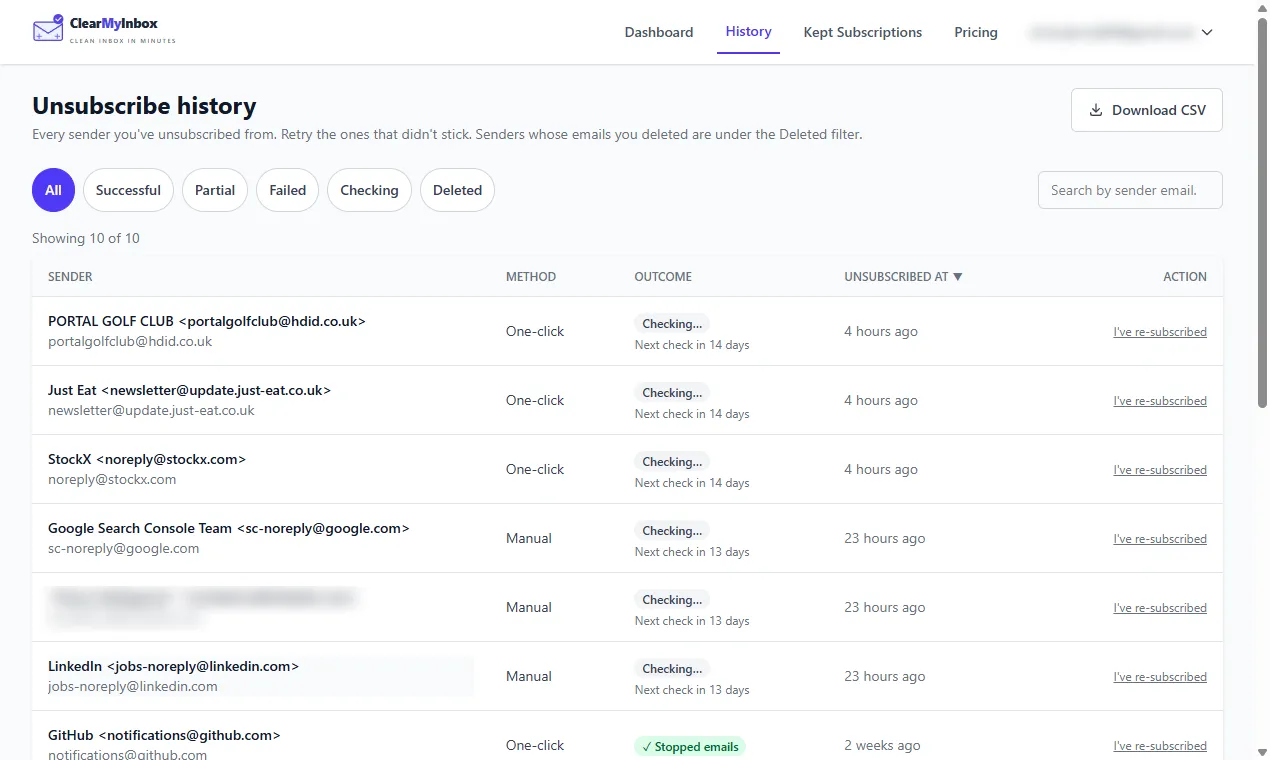
- Verify it worked. Because this category ignores opt-outs so often, check back. ClearMyInbox re-scans each sender about 30 days later and flags any that are still emailing.
- Block and filter the holdouts. For the senders that keep going, block them or set a filter that sends anything from their address straight to trash. This is the step that actually ends it.
Unsubscribing is not enough on its own
In most email categories, a good unsubscribe is the whole job. Here it is only the first move. Because senders share lists and ignore opt-outs, the only way to know you have won is to confirm the mail actually stopped and mop up the ones that did not. That verification step is exactly what ClearMyInbox is built around - it marks each sender Confirmed stopped once no new mail arrives, or flags it as still-emailing so you can block it. It also scores senders so the political and fundraising ones are easy to identify and cut in bulk.
Protect your address going forward
Once your inbox is clear, a little friction keeps it that way. When you donate or sign a petition, use a secondary email address rather than your main one, and untick any "keep me updated" or "share with partners" box you are offered - that single checkbox is often how one sign-up becomes a flood. If you want to keep supporting a cause, you can always give directly through its official site when you choose to, without handing your address to a list that will be shared onward. The same list-sharing pattern drives nonprofit appeals too - our guide to stopping charity and donation emails covers that side of it.
To clear the rest of the noise while you are at it, see our guides to stopping unwanted emails on Gmail and cleaning up a Gmail inbox.
Frequently asked questions
Why do political emails keep coming after I unsubscribe?▾
Because you are usually not on one list, you are on a network of them. Campaigns, committees, and PACs routinely rent, swap, and share supporter lists, often through the same fundraising platforms, so unsubscribing from one sender does nothing about the dozen others who now have your address. Some also ignore the opt-out entirely. That is why unsubscribing has to be paired with verifying it worked and blocking the ones that keep going.
Do political campaigns have to honor unsubscribe requests?▾
Less than most senders. Political email operates in a grey area of the CAN-SPAM rules, and enforcement is light, so a genuine unsubscribe link is more of a request than a guarantee. Many campaigns do honor it; the aggressive fundraising operations often do not. When an opt-out is ignored, blocking the sender or filtering their address straight to trash is the reliable fallback.
How do I stop all political emails at once?▾
Unsubscribe in bulk, then block the holdouts. A tool like ClearMyInbox scans your inbox, groups every political and fundraising sender it finds, and lets you opt out of all of them in one pass across Gmail and Outlook. Because this category is famous for ignoring opt-outs, the useful part is that it re-checks each sender afterwards and flags the ones still emailing so you can block them.
Will unsubscribing stop me getting official election information?▾
Unsubscribing removes you from campaign and fundraising email, not from official government notices. Voter registration confirmations, ballot information, and election-office communications are sent separately by state and local authorities and are not affected by opting out of a campaign's mailing list.
Is there a tool that stops political emails automatically?▾
Yes. ClearMyInbox finds every political and fundraising sender in your inbox, unsubscribes you from all of them at once, and then confirms which actually stopped so the persistent ones do not slip through. It works across Gmail and Outlook, the free tier covers the first three scans, and it never sells your data - which matters in a category built on trading your contact details.