The best bulk unsubscribe apps for Gmail and Outlook
The best bulk unsubscribe apps all promise a cleaner inbox, but they do surprisingly different jobs under the hood. Some send genuine opt-out requests so the mail stops. Others simply bundle, delete, or refile messages that already arrived, which looks tidy but leaves the sender free to keep emailing. A few are free because they quietly monetize your inbox. This guide compares the main options for Gmail and Outlook in 2026, grouped by what they actually do, so you can pick the one that fits your inbox.
Try ClearMyInbox free - bulk unsubscribe in one click, free to start.
Bulk unsubscribe apps compared at a glance
| App | What it does | Data model | Free tier | Providers |
|---|---|---|---|---|
| ClearMyInbox | Bulk unsubscribe, then verifies each sender stopped | Never sells data | Yes - free plan | Gmail, Outlook, Yahoo, IMAP |
| Clean Email | Full mailbox suite: rules, auto-clean, unsubscribe | Does not sell data | Trial | Gmail, Outlook, IMAP |
| Leave Me Alone | Privacy-first bulk unsubscribe | Does not sell data | Credits/trial | Gmail, Outlook |
| Unroll.me | Bundles subscriptions into a digest (no real opt-out) | Sold inbox data (NYT 2017); FTC found users were misled | Yes | Gmail, Outlook, others |
| Cleanfox | Bulk unsubscribe and delete, mobile-first | Parent sells purchase-data panels | Yes | Gmail, Outlook, others |
| Mailstrom | Bundles mail for bulk archive or delete | Does not sell data | Trial | Gmail, Outlook, IMAP |
| SaneBox | Filters and prioritizes mail (not an unsubscriber) | Does not sell data | Trial | Any IMAP |
The real dividing line: unsubscribe vs. reorganize
Before comparing features, sort every tool into one of two camps. The first camp sends real opt-out requests using the standard List-Unsubscribe header, so the sender stops emailing you. The second camp only reorganizes mail that already arrived - bundling it into a digest, deleting it in batches, or filing it into folders. The second camp can make an inbox look clean in minutes, but the underlying subscriptions keep flowing, and the moment you stop tidying, the flood returns. If your goal is less mail rather than better-sorted mail, you want the first camp.
Dedicated unsubscribers
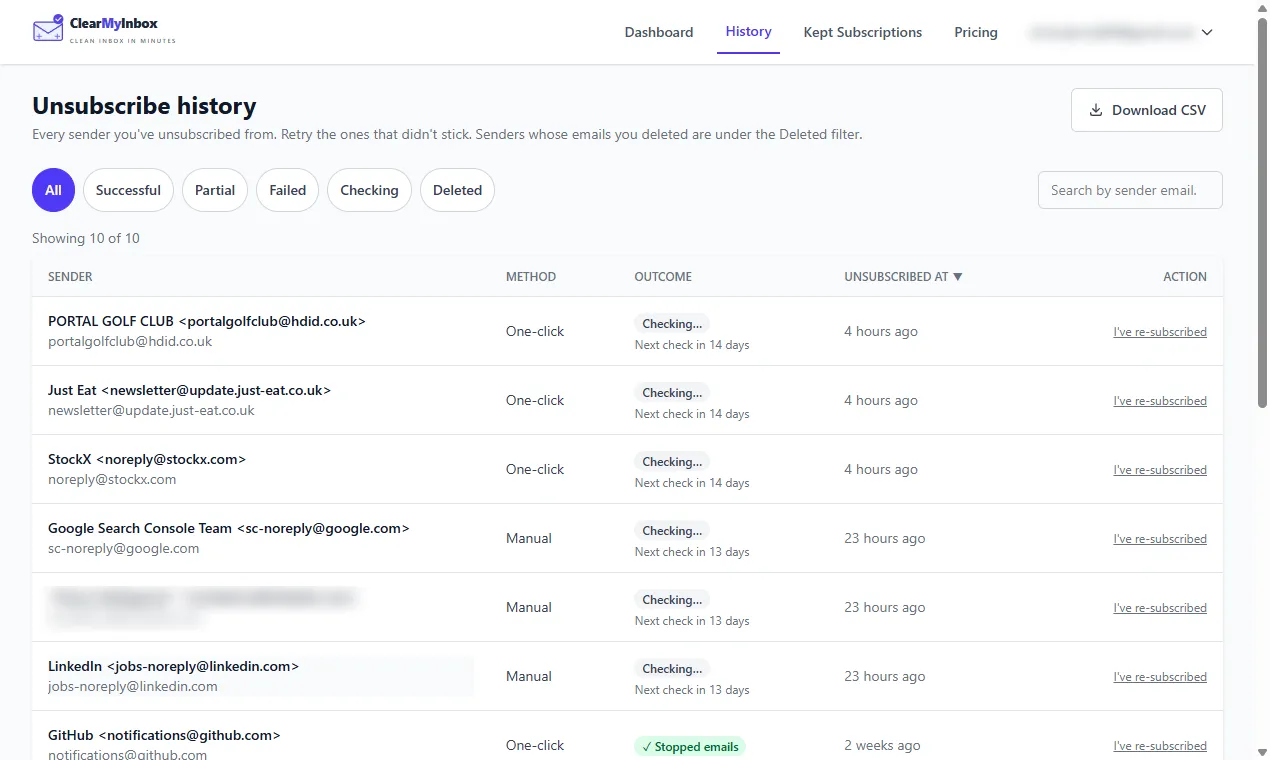
ClearMyInbox is built for one job: it scans Gmail, Outlook, Yahoo, or any IMAP mailbox, groups every newsletter and marketing sender, lets you opt out of dozens at once, and then verifies the result - marking each sender Confirmed stopped once the mail actually ends, or flagging the ones that ignore the request. That verification step is the thing almost no other tool does. It is free to start and funded by paid plans, not by your data.
Leave Me Alone pioneered the privacy-first take on bulk unsubscribe and does the core job well; it typically uses a credit or subscription model rather than a free tier. Cleanfox also sends genuine opt-outs and is slick on mobile, but it is free because its parent company builds and sells anonymized purchase-data panels from users' inboxes - a trade not everyone wants to make.
Full mailbox suites
Clean Email is the most feature-complete option here: unsubscribe plus rules, auto-clean, a screener, and dozens of one-off cleaning actions. If you want an ongoing mailbox-management platform and do not mind the learning curve, it is a strong, privacy-respecting choice. If you opened it just to kill a few dozen newsletters, it can feel like a lot of surface area for one task.
Reorganizers (not true unsubscribers)
Unroll.me is free and quick, but its signature Rollup bundles subscriptions into a daily digest rather than unsubscribing you, and its parent company was found by the FTC to have sold data extracted from users' inboxes. Mailstrom is excellent at bundling mail by sender or date so you can bulk-archive or delete it - great for excavating a huge backlog, but deleting messages does not stop the sender. SaneBox is a smart triage service that files less-important mail into folders; it reduces clutter without reducing the number of emails you receive.
How to choose
Start from the outcome you want. If you want mail to genuinely stop and proof that it did, use a dedicated unsubscriber with verification. If you want an all-in-one mailbox manager, a suite like Clean Email fits. If you only want incoming mail sorted, a filter is enough. And whatever you pick, check how it is funded - a tool that charges a subscription has no reason to read your inbox for anything beyond finding your subscriptions. If the volume itself has started to feel stressful, our guide to email overwhelm pairs well with any of these tools.
If you want to try the manual route first, our Gmail mass unsubscribe guide and our walkthrough on how to clean up a Gmail inbox cover it step by step.
Frequently asked questions
What is the best bulk unsubscribe app?▾
There is no single best one, because they work differently. If your goal is to genuinely stop unwanted mail and confirm it worked, a dedicated unsubscribe tool like ClearMyInbox is the closest fit: it opts you out in bulk and then verifies each sender stopped. If you want a broad mailbox suite, Clean Email covers more ground. If you only want incoming mail sorted rather than reduced, SaneBox is a filter, not an unsubscriber. Match the tool to the job.
Do bulk unsubscribe apps actually unsubscribe you, or just hide emails?▾
It varies, and this is the most important thing to check. Real unsubscribers such as ClearMyInbox, Clean Email, Leave Me Alone, and Cleanfox send genuine opt-out requests using the List-Unsubscribe header. Others only reorganize mail: Unroll.me bundles subscriptions into a daily digest without unsubscribing, Mailstrom bulk-deletes messages that already arrived, and SaneBox files mail into folders. Deleting or hiding mail does not stop the sender.
Are free unsubscribe apps safe?▾
Some are, some earn their keep from your inbox. The classic caution is Unroll.me, whose parent company sold data pulled from users' inboxes (reported by the New York Times in 2017) and which the FTC later found had misled users about how it accessed those inboxes, and Cleanfox, which is free because its parent builds and sells anonymized purchase-data panels. Prefer a tool funded by subscriptions, that connects read-only through official OAuth, and that states plainly it does not sell your data.
How do I know an unsubscribe actually worked?▾
Most apps do not tell you - they report the request as sent and move on, even though a sender can ignore a broken or fake unsubscribe link. ClearMyInbox is built around this gap: it re-checks each sender after you opt out and marks it "Confirmed stopped" once no new mail arrives, or flags it as still-emailing so you can escalate.
Can I bulk unsubscribe without an app?▾
Yes, but it is slow. Gmail and Outlook both surface the unsubscribe link at the top of many marketing emails, and you can build filters to auto-archive the rest. A bulk tool just does this across dozens of senders at once. Our guides to Gmail mass unsubscribe and cleaning up a Gmail inbox cover the manual route step by step.